
Choose a carton-sealing hot melt around the actual board, the line’s bonding interval and the conditions after shipment. Qualify the closed package through a recorded trial rather than selecting an adhesive by its application temperature alone.
Describe both the line and the package journey
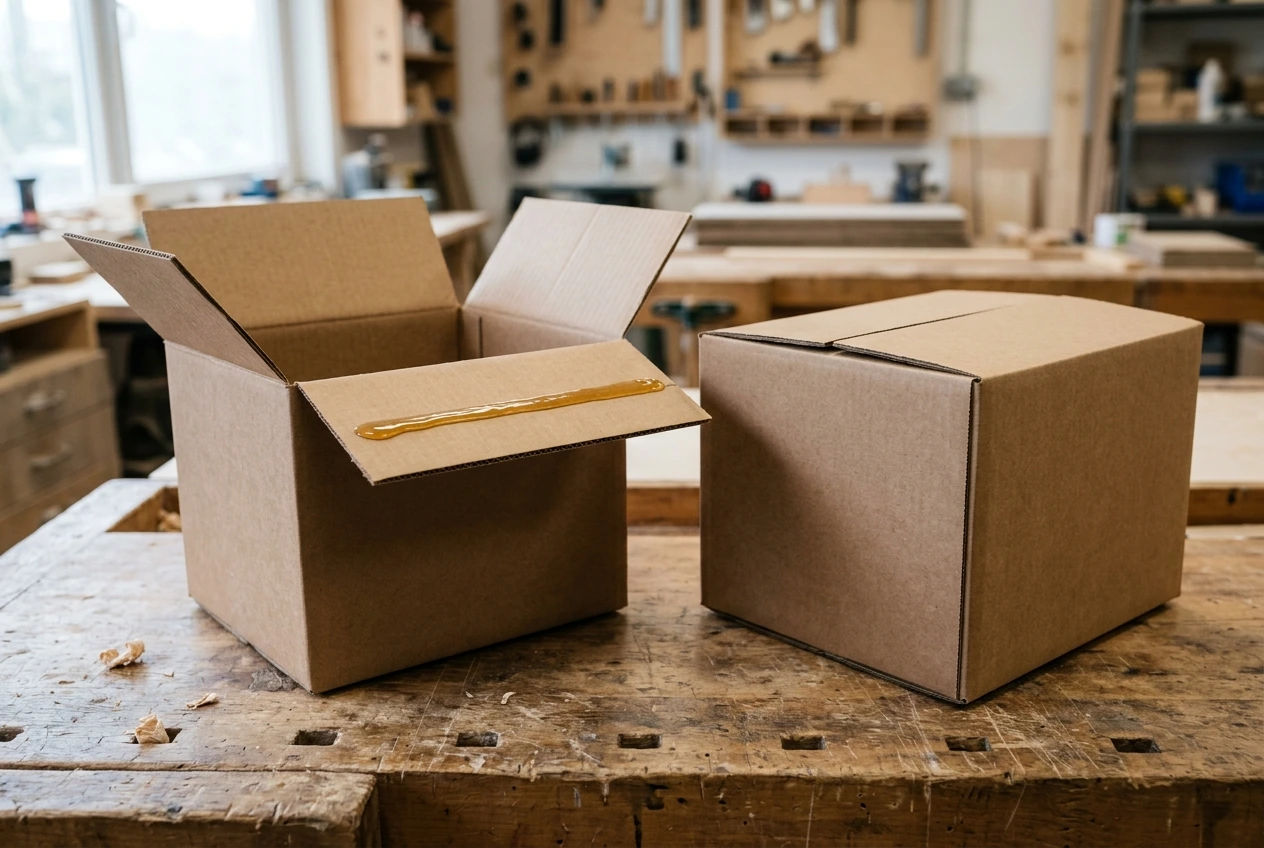
The application has two environments: the sealing process and the later handling and storage of the package. H.B. Fuller’s case-and-carton explanation identifies substrate, application and timing variables, and explains why shipping conditions also matter. Its discussion of softening reinforces that an adhesive’s melting or softening figure is not a substitute for a service-performance claim.
Provide the supplier with actual board samples and identify the bonding surface. Printed, coated and uncoated surfaces deserve separate identification. Include the case contents and closure geometry, since the finished package must retain them under the intended handling conditions. Do not assume that a material with a familiar chemistry name is interchangeable with the accepted formulation.
Separate time before contact from time under compression
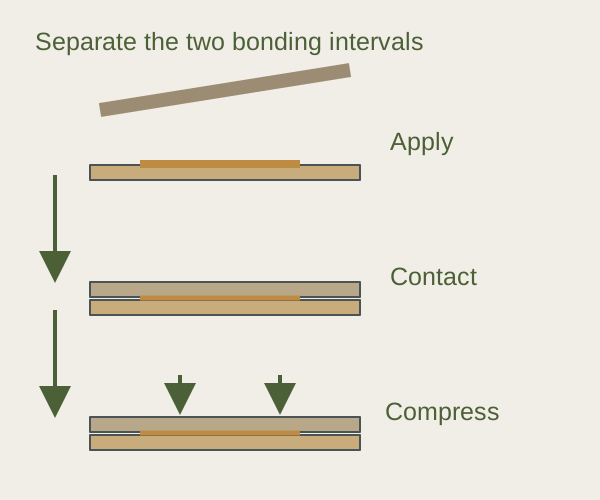
Open time concerns the interval available before the adhesive must meet the second surface under the required conditions. Compression time concerns the period the closing surfaces are held together. A change in line timing can affect one or both. Keep the definitions tied to the adhesive supplier’s and machine supplier’s documentation rather than comparing isolated figures with different test methods.
Henkel’s pop-open guidance discusses preset, where adhesive sets before the surfaces are compressed, and poor-compression problems. These distinctions explain why adding adhesive or changing heat without observing contact may miss the cause.
Build the trial around a reference condition
Start with an accepted package and its known record if one exists. If there is no accepted reference, agree the required package checks before running candidates. Keep adhesive, board and machine conditions traceable so the result can be interpreted later.
Use the following blank record for each trial condition. Fill the result cells with observations rather than an assumed pass.
| Trial field | Input to record | Result or evidence |
|---|---|---|
| Material identity | Adhesive grade/lot; board supplier/lot; coating | Retained sample identifiers: ____ |
| Package condition | Filled mass, flap geometry and board conditioning | Observed board/closure condition: ____ |
| Application | Approved temperatures, deposit pattern and amount method | Placement/deposit record: ____ |
| Bonding interval | Time to flap contact and time under compression | Measurement method and observations: ____ |
| Run condition | Startup, steady run and relevant restart | First accepted sample and rejected samples: ____ |
| Later conditioning | Agreed storage/handling conditions and duration | Inspection result linked to original sample: ____ |
| Decision | Pre-agreed package acceptance criteria | Accept, revise or reject, with reason: ____ |
This is a recording template, not a test protocol with universal thresholds. The responsible package and adhesive specialists must define the sampling, conditioning and acceptance appropriate to the product and distribution route.
Read a failed closure before proposing a cure
Observe whether adhesive transferred to both surfaces, whether contact is consistent and where separation occurred. Record board tearing, clean separation, displaced adhesive or local lack of contact as observations. A single fiber-tear observation does not establish that the entire package survives its intended journey.
If the package opens immediately after compression, preserve the timing and application record. If it opens after storage or handling, keep those conditions linked to the same sample identity. Changing adhesive quantity can also change the way the bond develops, so “more glue” should be treated as a controlled trial rather than a default remedy.
Close the trial with a controlled production record
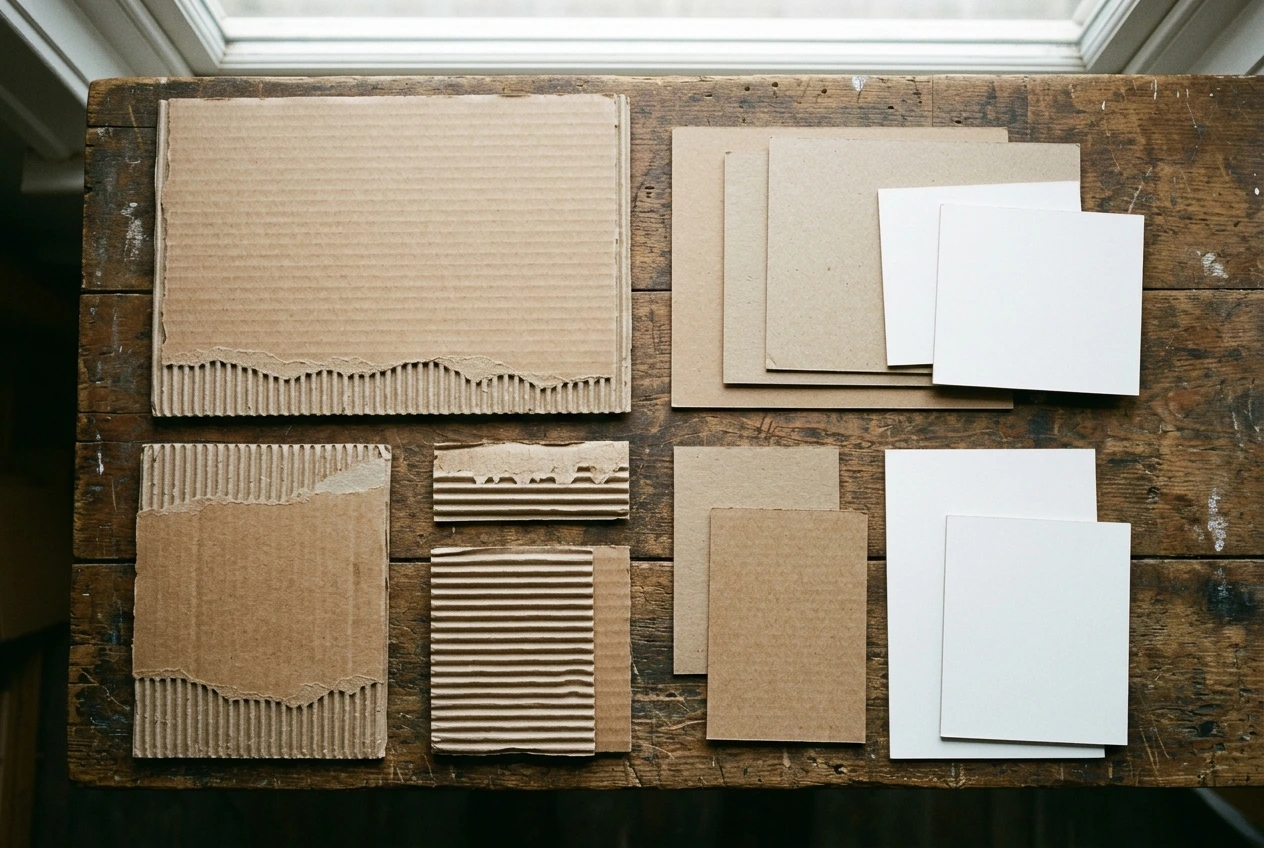
For an accepted combination, save the adhesive grade, stock identity and approved machine recipe together. Record the verification method and the changes that require review: a new board supplier, a coating change, a different adhesive or a changed closure interval. Reuse the record when investigating a later defect rather than assuming the new material matches the original trial.
For fine threads at cut-off, use the separate hot-melt stringing investigation. The carton sealing adhesives collection keeps material selection distinct from the wider dispensing-machine task.
Method and sources
This article uses H.B. Fuller carton-sealing fundamentals and Henkel’s pop-open guidance. The worksheet and suggested observation sequence are original editorial material. No adhesive recommendation, transport certification or measured bond result is claimed. Reviewed October 2026.