Investigate hot-melt stringing by recording when the thread forms and which application point produces it. Check the adhesive’s approved operating conditions and the equipment instructions before making a temperature, pressure or nozzle change.
Identify the symptom before changing a setting
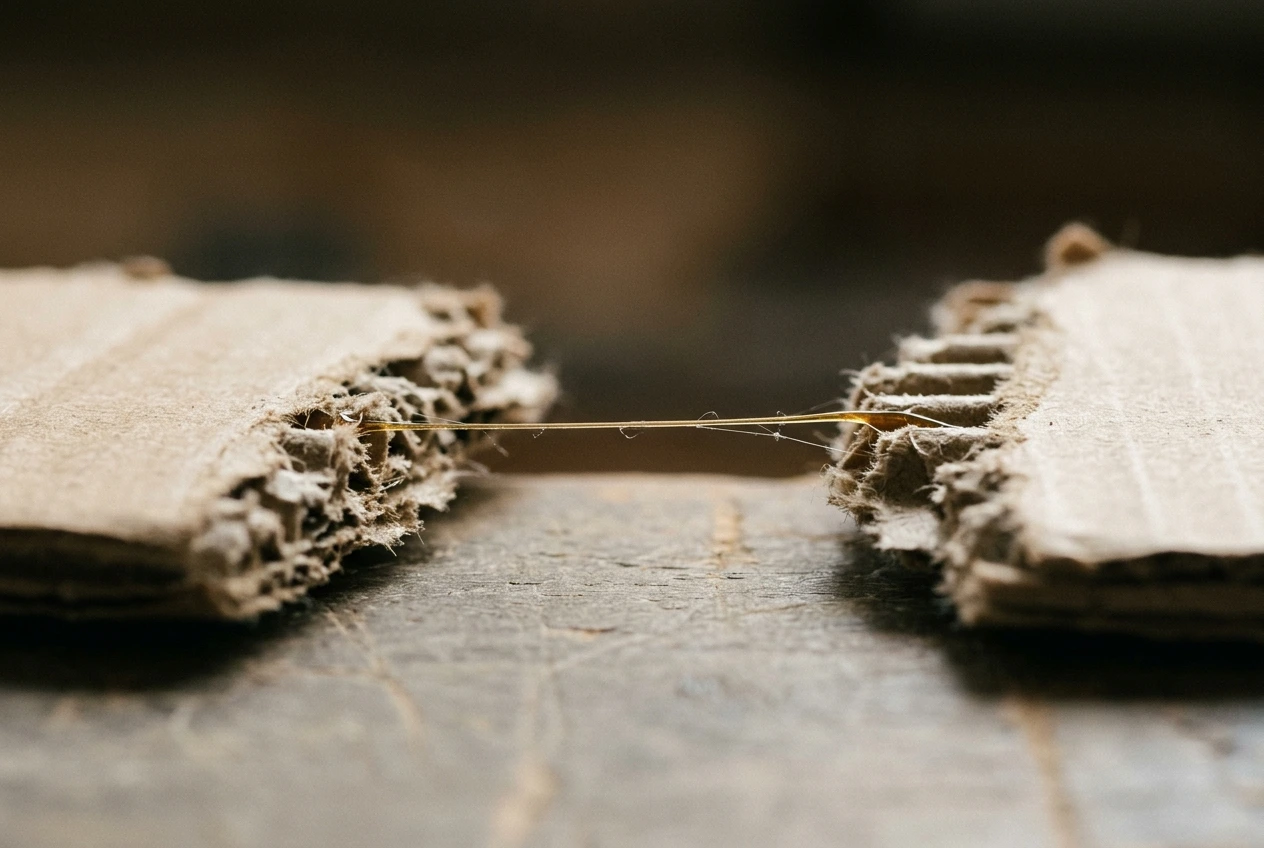
Stringing leaves a fine thread as adhesive fails to separate cleanly during application. A nozzle that releases adhesive while it is supposed to be off presents a dripping problem. Char, smoke or visibly degraded material calls for another investigation. H.B. Fuller’s troubleshooting guide distinguishes those symptoms.
Record whether one head or several heads produce threads. Note whether the issue occurs only after a stop, after a material change or during an otherwise stable run. Keep the affected package and a photograph with the adhesive identity and recipe. “The line is stringing” is too broad to direct a useful intervention.
Inspect the application geometry
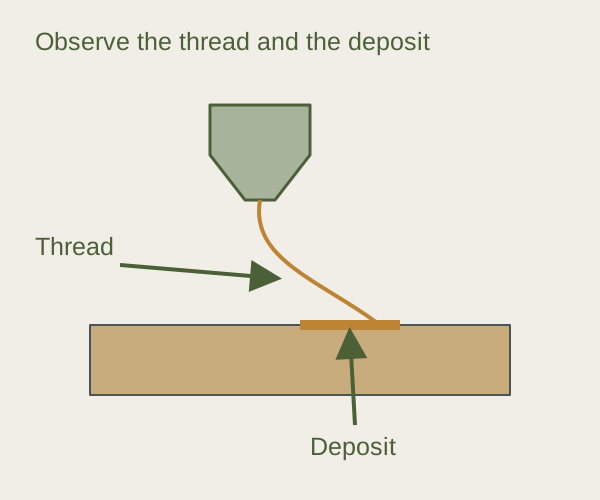
Henkel’s stringing guide identifies nozzle distance and condition among the relevant variables. A long exposed path can change the adhesive’s condition before it reaches the package. Tip damage or deposits can also interfere with separation.
Observe the normal application position from an approved safe location. Have authorized personnel compare the nozzle arrangement with the machine instructions. This guide supplies no nozzle gap: the acceptable geometry depends on the head, product path and required pattern. Do not reposition a live hot applicator to imitate an illustration.
Keep supply and environment in the same investigation
Henkel groups relevant causes under equipment, environment and adhesive. Its guidance discusses temperature/viscosity conditions, airflow, nozzle arrangement and supply components. Use those categories to inspect what changed. They do not justify increasing temperature whenever a thread appears.
Compare the actual adhesive grade with its current technical instructions. Confirm the relevant tank, hose and application conditions by the equipment’s approved method. Preserve the distinction between a displayed setpoint and a measured condition. Record nearby fans, cold material or changed ambient conditions if they coincide with the onset.
Run a controlled troubleshooting record
| Observation | Check next | Keep the trial interpretable |
|---|---|---|
| One nozzle affected | Tip condition, geometry and head-specific behavior | Compare with an unaffected head only where configurations match |
| Several heads affected together | Adhesive identity, supply condition and shared change | Keep the previous material/recipe record |
| After a pause | Restart condition and thermal history | Record the pause duration and first accepted package |
| After board or ambient change | Substrate condition and direct airflow | Record the package and local condition alongside the settings |
| Thread plus dripping | Off-state behavior as well as cut-off | Treat the symptoms separately; consult the module instructions |
| Visible degradation | Approved inspection and maintenance procedure | Do not pursue a cosmetic fix while ignoring degraded material |
Choose an authorized change with a stated reason, record it and observe the result before changing another independent variable. If several changes are unavoidable for the approved procedure, record them as one intervention and avoid claiming that a single variable caused the improvement.

Recheck the bond after the thread disappears
A cleaner application does not automatically preserve the bond. Retain samples after the change and review deposit position, contact and the package’s agreed performance checks. A lower visible residue level is useful only if the intended joint remains acceptable.
Keep cleaning, pressure relief, hot-part access and component replacement within the equipment instructions and personnel authorization. H.B. Fuller’s guide includes example corrective actions for several symptoms; it does not establish universal pressure or temperature settings for other machines. Escalate unresolved faults with the symptom record and the applicable adhesive and equipment documents.
For the upstream specification, use the dispensing-machine brief. For a wraparound-label problem, the labeling record separates the seam stages. The hot-melt systems collection links these tasks.
Method and sources
Henkel and H.B. Fuller manufacturer guides ground the symptom distinctions and investigation categories. The trial record is original editorial guidance. The photographs are illustrative, with no claimed production defect or repair result. Reviewed October 2026.