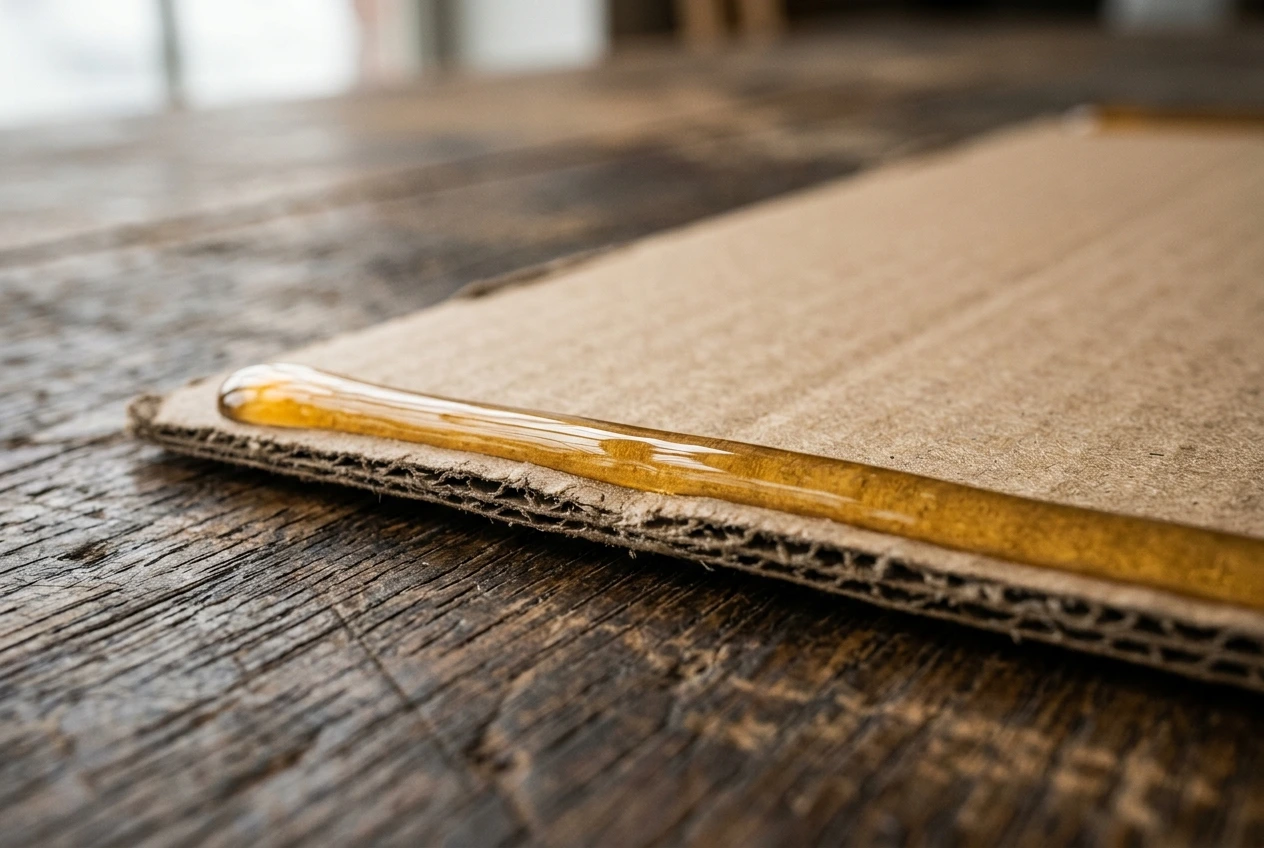
Accept a folder gluer on the finished carton and the production blank it must handle. Check board and crease behavior before assuming that a side-seam defect can be corrected by changing the glue application.
Start with the converted blank
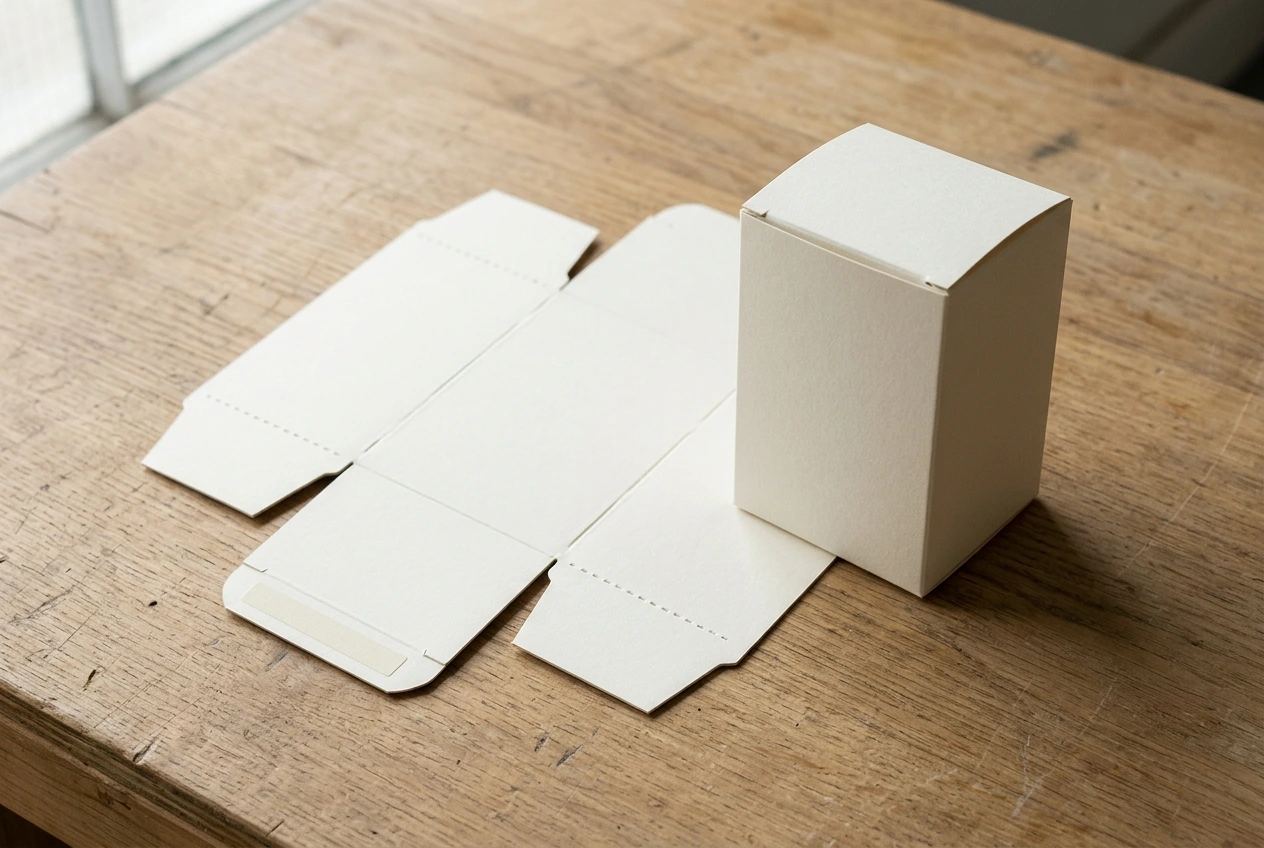
A folder gluer folds a prepared blank and bonds the intended panels. The blank brings its own geometry: cut edges, scores, glue flap and material surfaces. Record the approved drawing revision and retain samples of the actual production board. The machine cannot be evaluated independently of those inputs.
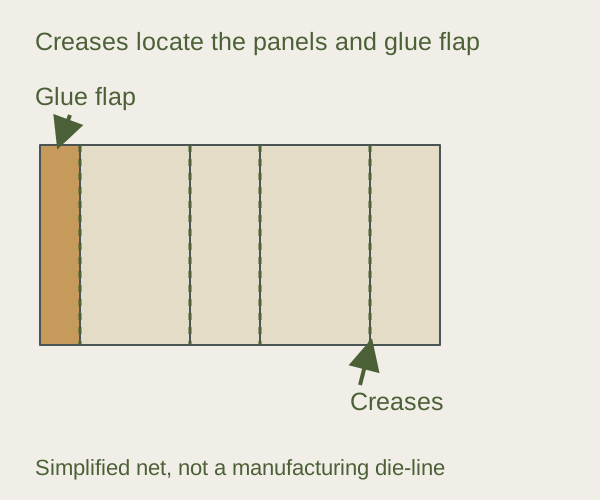
Check the blank flat before examining the formed carton. Identify the glue surface, the surface it contacts and any print, coating or treatment at the joint. Mark the intended folds on a reference drawing. For a complex carton, keep the sequence visible rather than relying on the final assembled shape to explain how it must be formed.
Separate alignment, folding and gluing
BOBST’s EXPERTFOLD documentation describes feeding/alignment, a gluing unit, transfer and other configuration-dependent modules. The example demonstrates that these are distinct functions. It does not mean every folder gluer has the same modules or uses the same application head. See the published EXPERTFOLD description.
A blank that enters inconsistently can reach the glue station in the wrong position. A crease that does not fold as intended can create a poor contact even with adhesive in the right place. Track the blank through the stages before choosing the variable to adjust.
Use a stage-based acceptance sheet
| Stage | Inspect | Retain as evidence |
|---|---|---|
| Incoming blank | Drawing revision, board lot, coating and score condition | Approved flat reference and material identification |
| Feed/alignment | Repeatable blank position and evidence of scuffing | Representative samples from relevant run conditions |
| Folding | Panel alignment and behavior at the crease | Formed unglued or otherwise safely examined reference |
| Glue placement | Deposit stays inside the specified joint area | Pattern record tied to adhesive and machine recipe |
| Transfer/contact | Panels meet and remain in the intended position | Joint inspection after the agreed bonding period |
| Finished carton | Opens and forms as intended without unintended panel bonding | Accepted sample and documented reject criteria |
These are suggested review categories. Define sampling and pass criteria for your package before the trial. A line-speed figure alone does not describe the proportion of cartons that will be acceptable, nor the time needed for changeover and recovery.
Diagnose the shape as well as the seam
For a skewed carton, compare the panel alignment with the flat blank and feed condition. For an open seam, inspect whether the mating surfaces actually contacted the adhesive deposit. For unintended internal bonding, check the pattern’s position relative to the finished joint. Several stages can produce a similar finished symptom.
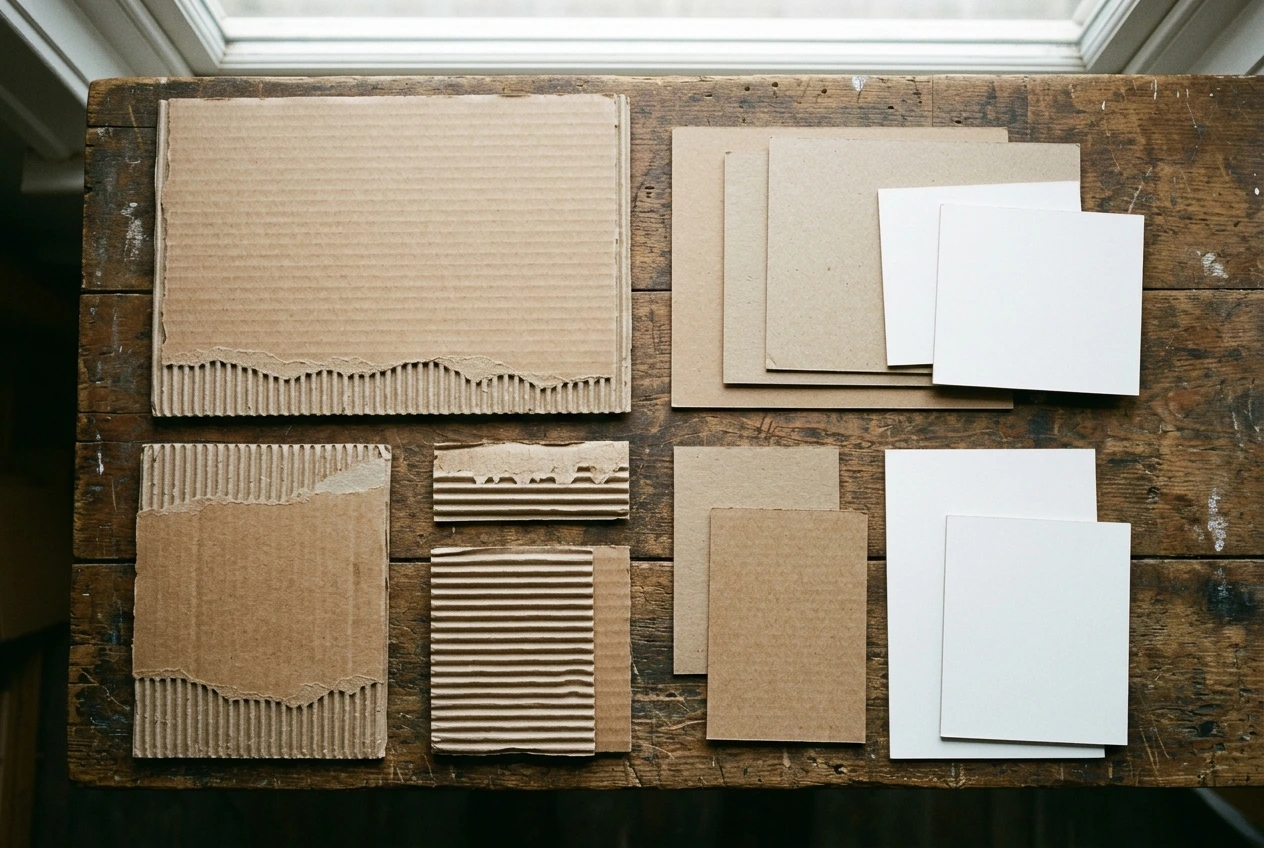
Keep cases of board cracking or surface damage distinct from adhesive failure. Record where the material split or deformed and whether the issue follows a particular board lot, score or folding condition. Do not label every torn surface as a successful bond; the package still has to function as intended.
Trial more than an uninterrupted middle section
Include the agreed startup condition, a relevant format change and restart after a normal interruption. Retain the first acceptable carton after each event, along with the number or disposition of preceding rejects. This makes the record useful for production planning instead of documenting only an easy steady-state sample.
For the glue system, request the approved adhesive compatibility, application form and service procedure. Robatech’s system overview distinguishes delivery components and application heads, which helps identify what information belongs to the glue-system supplier. The record should make ownership clear when the folder-gluer and adhesive system come from different organizations.
Use the dispensing application brief for the joint specification and the packaging gluing machines collection for the wider equipment decision.
Method and sources
This guide uses BOBST’s documented process modules, Robatech’s component overview and retrieved local folder-gluer research. The acceptance sheet is original editorial work. It makes no claim about an unnamed machine’s board range, capacity, certification or glue architecture. No cartons were produced or tested for this article. Reviewed October 2026.