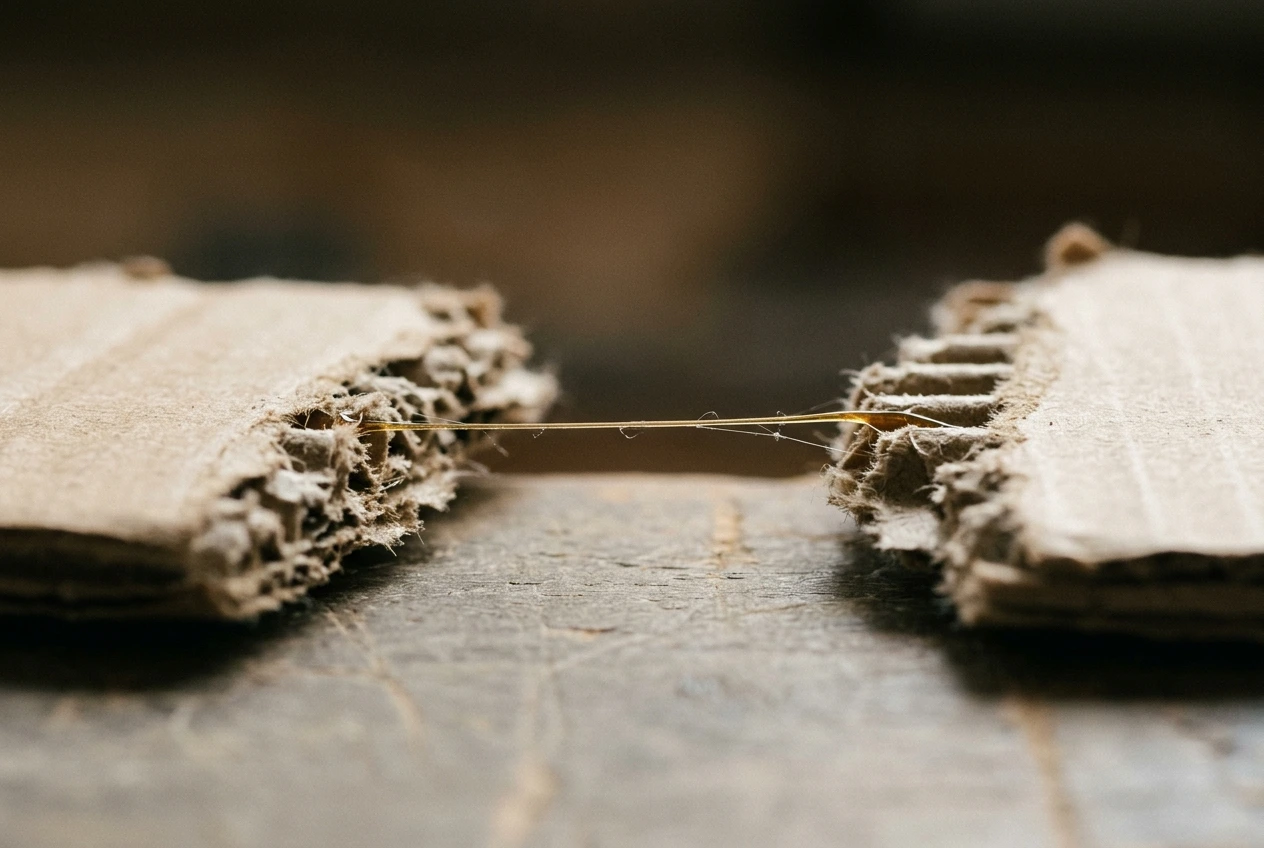
Trace a hot-melt labeling fault through adhesive supply, label transfer and the finished overlap seam. Record which stage first departs from the accepted condition before changing temperature or glue quantity.
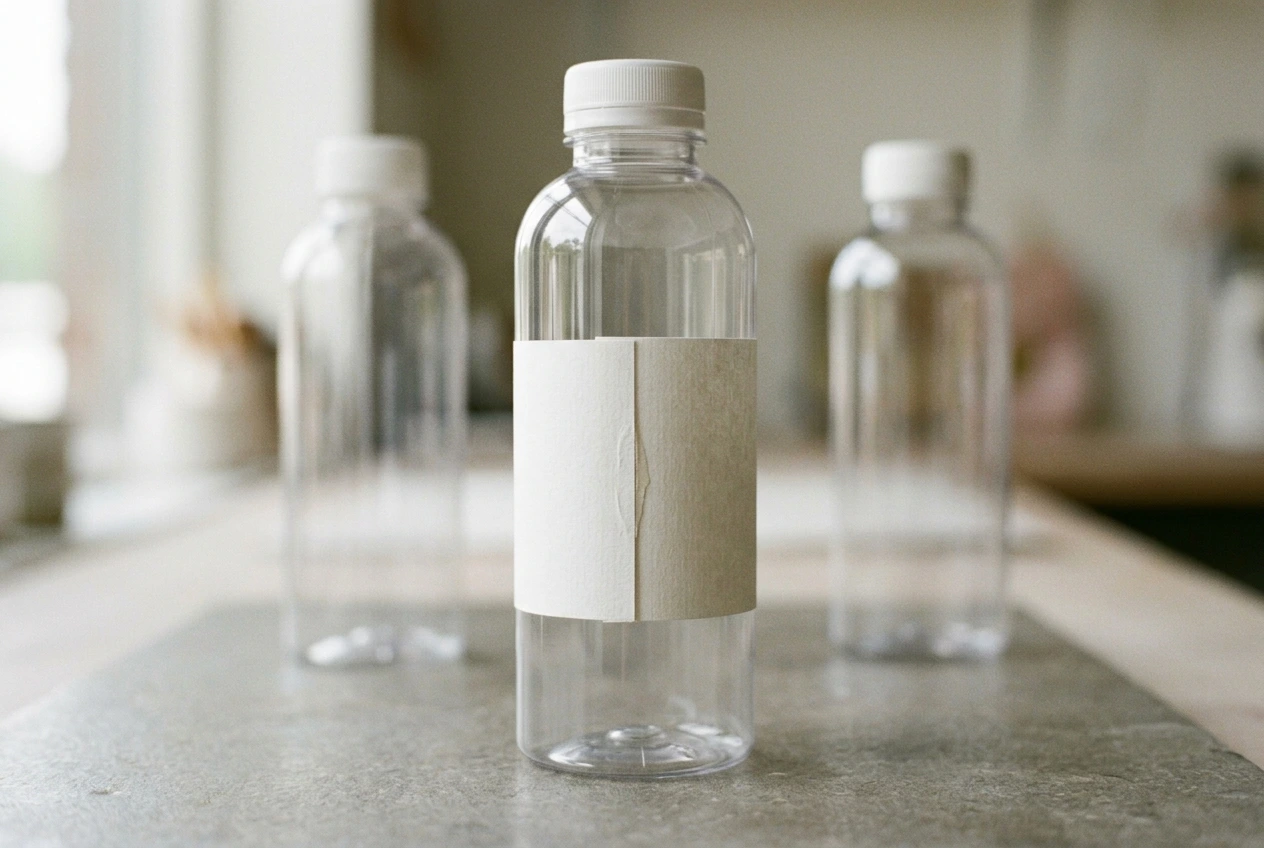
Identify the labeling architecture
This guide focuses on reel-fed wraparound labels using hot melt, with Krones Contiroll as a documented process example. It does not describe pressure-sensitive labels, shrink sleeves or every pre-cut labeling arrangement.
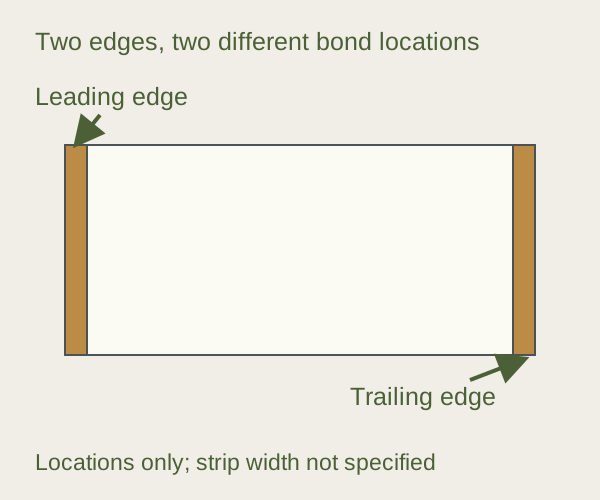
Krones describes a web pulled from a reel and cut to length, a heated roller placing glue at the leading and trailing label edges, and a rotating container that completes the wrap. See the Contiroll method of operation. Those relationships explain why the beginning of attachment and the closing overlap need separate observations. They do not specify the settings for another labeling machine.
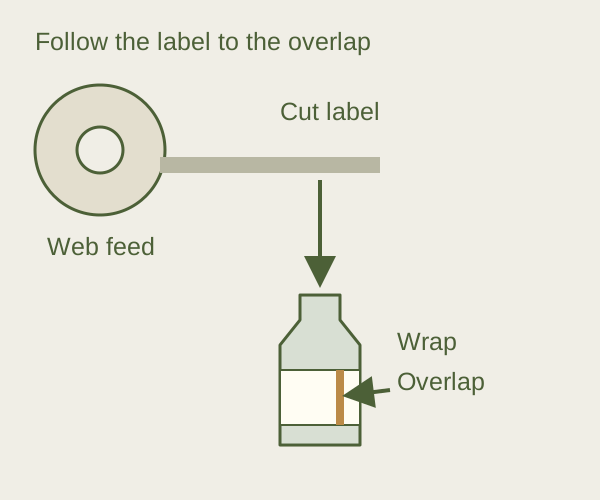
Follow the label before blaming the adhesive
A missed initial attachment can stop the label from wrapping as intended. A trailing-edge defect may leave an open overlap even when the label initially attaches. A label that wraps unevenly can also involve web feed, cutting, container presentation or rotation. Keep these observations separate in the fault record.
Compare the location of the failure on rejected bottles. Does it repeat at the same edge? Does the label have the expected cut and registration? Does the defect begin after a reel change, an extended stop or a change of container? These are practical observation questions, not a diagnosis of a particular drive or component.
Record supply and transfer conditions together
A temperature setting on a display is one input to the adhesive system. Preserve the adhesive grade and lot, the recipe, the relevant temperature readings and the time since startup or restart. Have the responsible supplier define the measurement method and acceptable range for the actual adhesive and labeling system.
Use one record for the complete event.
| Record field | Capture | Reason |
|---|---|---|
| Container and label | Container lot, label stock and reel identification | Separates material changes from settings changes |
| Adhesive | Grade, lot and current supplier instructions | Prevents comparison across unlike formulations |
| Onset | Startup, restart, reel change or steady run | Identifies the transition associated with failure |
| Location | Leading edge, overlap, label body or container position | Keeps distinct mechanisms separate |
| Supply/transfer | Actual accessible readings and visible deposit condition | Links supply to what reaches the label |
| Result | Retained sample, photograph and accepted/rejected decision | Preserves a traceable physical outcome |
Do not infer machine output or bond performance from a vendor’s maximum throughput description. The application and actual label format still need their own acceptance record.
Separate stringing, seam lift and registration errors
Fine adhesive threads suggest an application cut-off investigation. A clean-looking label with an overlap that later lifts needs a bond and material review. A consistently misplaced seam calls for checking the label’s position and transfer sequence as well as the adhesive. One rejected package can show more than one symptom; record each without declaring a single cause in advance.
Before making an authorized change, define the observation you expect to improve. Keep the previous setting so the trial can be interpreted. After a change, examine both the immediate seam and the package after the agreed conditioning period. Initial appearance and retained bond performance answer different questions.
For a nozzle-based stringing problem, use the stringing troubleshooting record while respecting the actual labeling architecture. Return to the hot-melt systems collection for the separation between supply and application tasks.
Method and sources
Krones’ published process description grounds the leading/trailing-edge and container-rotation relationships. The diagrams and fault record are original explanations, not mechanical drawings or operating instructions. We have not run the machine or tested an adhesive-label combination. No formulation, temperature or production-rate recommendation is given. Reviewed October 2026.